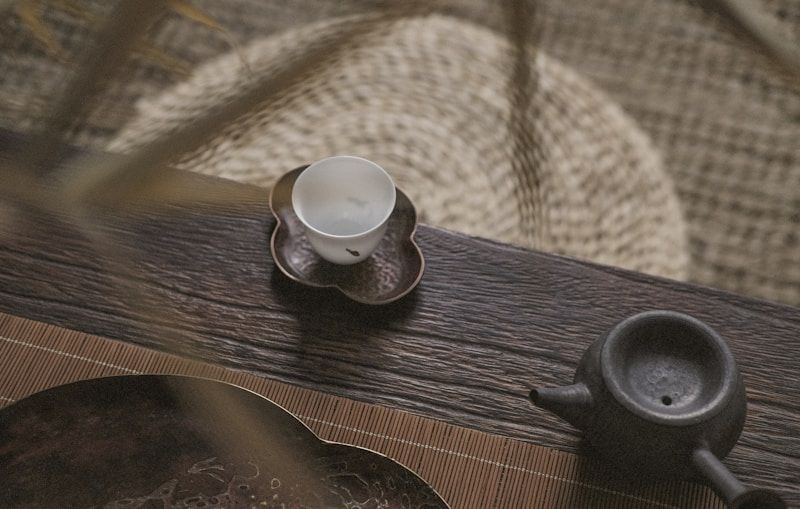
Teacup
Teacups are essential to the tea drinking experience — their shape, capacity, and material all affect taste. Chinese gongfu cups are typically small (30-50ml) to allow multiple tastings per session, appreciating how the tea evolves with each infusion. Cup types include gongfu cups, smelling cups, and tasting cups, each with specific purposes.
Types and Their Uses
Gongfu cups (tasting cups) are most common, 30-50ml capacity, designed with a slightly inward-curving rim to gather aroma. Smelling cups are taller and deeper, used for aroma appreciation — after pouring tea into the tasting cup, the smelling cup retains concentrated fragrance for evaluation. Some tea sets use sake-cup style cups with thinner walls, ideal for appreciating delicate high-mountain oolongs. When choosing, check that the rim is smooth (affects mouthfeel) and walls are even (affects heat retention).
Material Choices
Porcelain cups are most common — smooth, non-absorbent, faithfully presenting tea flavor for all types. Zisha cups are rare but their breathability allows slight oxidation, suitable for aged Puer. Glass cups are mainly for green and cold brew teas, allowing leaf observation. Clay cups retain heat well, suitable for winter, but less common than porcelain. For gongfu, small cups (30-50ml) are standard for appreciating evolution across infusions; for daily drinking, 80-100ml larger cups work well.
Aesthetic Pairing
Matching cups with teapots is an important aspect of tea table aesthetics. Common pairing principles: color harmony (blue-and-white pot with matching cups) or contrast (white porcelain pot with vermillion cups); unified form (round pot with round cups); proportional size (pot capacity should be 3-5 times a single cup to serve 3-5 cups). A beautiful tea set is not just tools but art that enhances the visual and spiritual pleasure of tea drinking.


