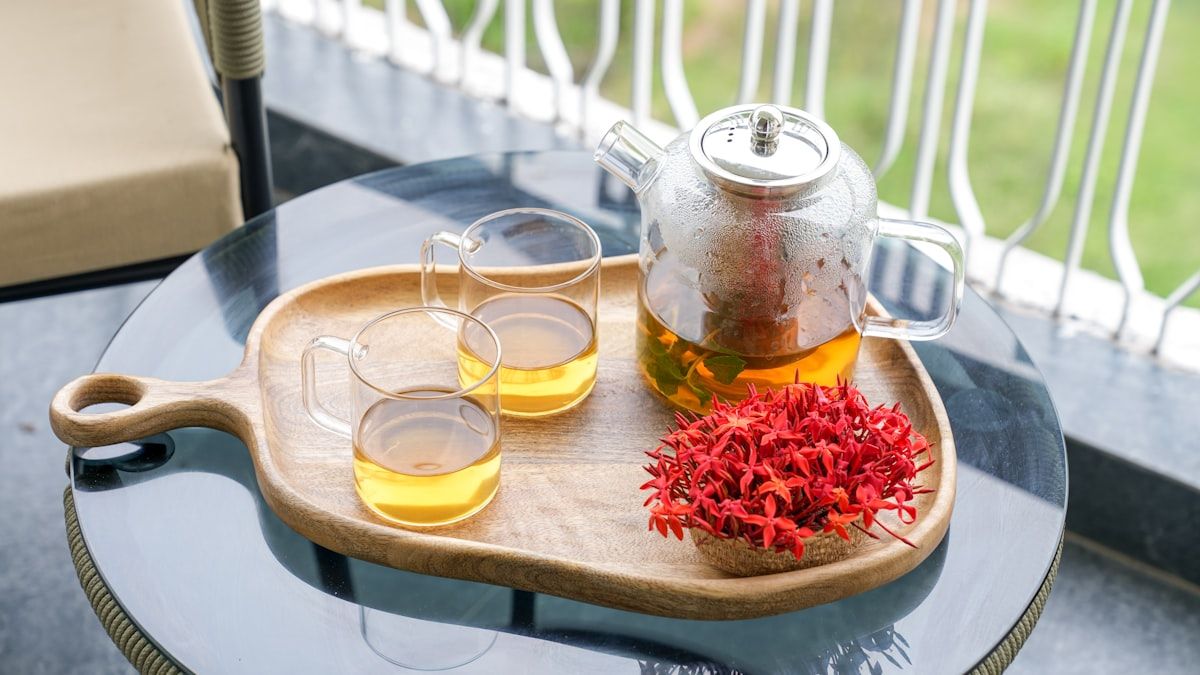
Tea Tray
The tea tray is the foundation of the tea setup — not just a functional drainage container but the visual centerpiece of the tea space. Material, shape, and size directly affect tea table layout and atmosphere. Trays are divided into dry and wet types, each suited to different situations.
Dry vs Wet Trays
Dry trays (ganpaotai) have flat surfaces without drainage holes — tea water is absorbed by tea cloths or poured into separate containers. Advantages: clean, elegant appearance, won't wet the tea space, ideal for home or indoor use. Disadvantage: limited capacity, requires frequent cleanup. Wet trays have drainage holes and a water reservoir, allowing you to pour water directly on the tray to rinse teaware. Better for situations requiring大量用水, such as tea demonstrations. Wet trays are usually larger, suited for dedicated tea rooms.
Material Selection
Wooden trays are most traditional — common woods include rosewood, sandalwood, and black walnut. Wood grain is beautiful with warm texture but requires regular maintenance to prevent cracking. Bamboo trays are lightweight, durable, and affordable but may discolor or warp with prolonged water exposure. Stone trays (such as Schist or Black Stone) are sturdy, non-absorbent, easy to clean, but heavy. Bakelite (plastic-ceramic) trays are modern, lightweight, durable, and affordable, though lacking natural texture.
Size and Placement
Tray size depends on teaware quantity and space. For standard gongfu setup (teapot, fairness pitcher, 3-5 cups, tea holder, tea cloth), a 40-60cm tray is recommended; for larger setups or more people, 60-80cm works well. Shape: square trays offer neat, formal appearance; round trays feel softer, suited for relaxed tea sessions. Placement should be in an accessible position with open sight lines,原则上 not blocking host-guest communication.


