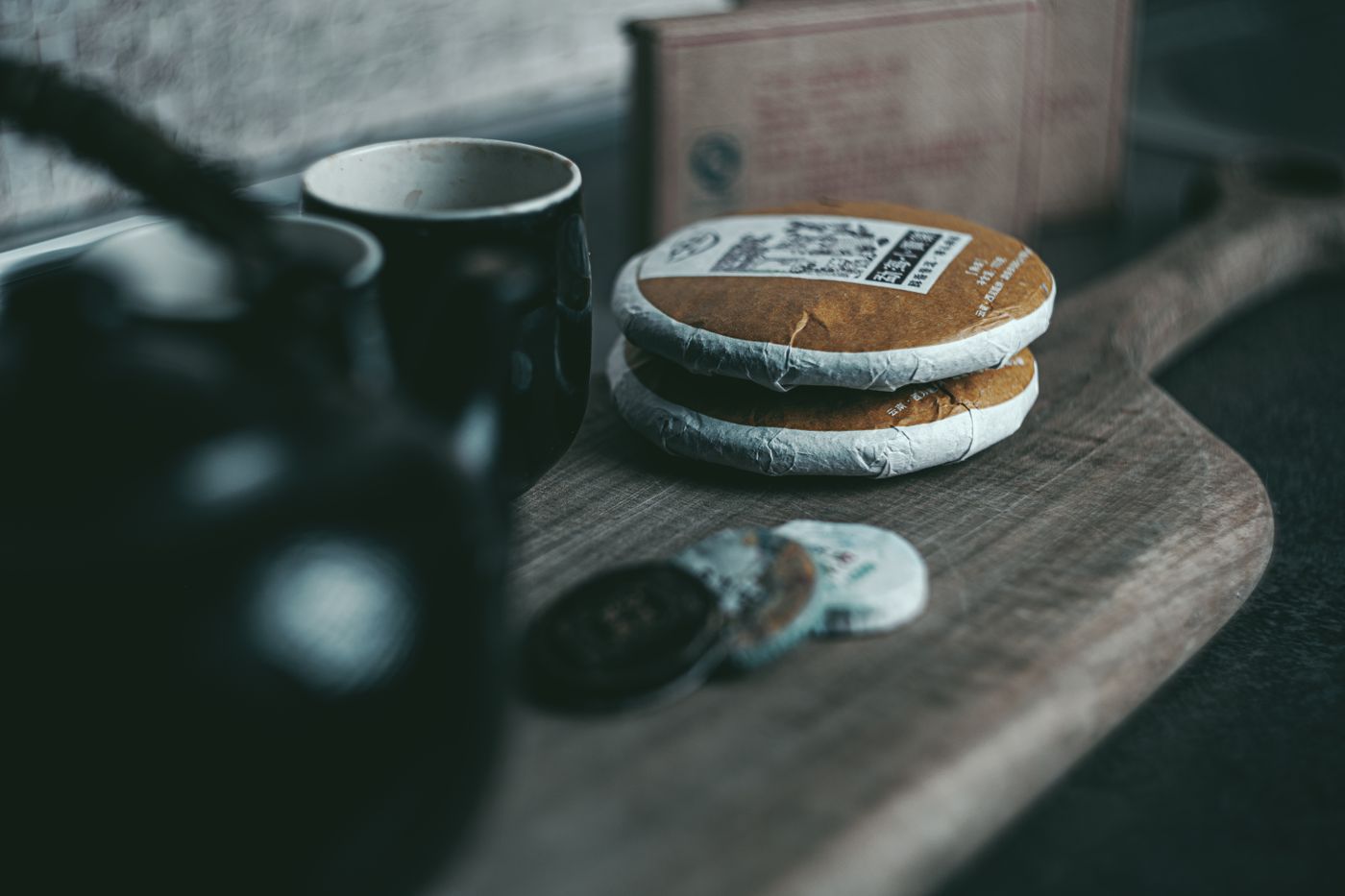
Dark Tea
Dark tea is the category of post-fermented teas, with Yunnan Pu'er being the most famous. Unlike other teas, dark tea continues to ferment and transform after production, gaining complexity and value with age. Hunan dark tea, Hubei green brick, Sichuan Tibetan tea, and Guangxi Liubao all belong to this category.
What Makes Dark Tea Different?
Dark tea's defining feature is post-fermentation — microbial activity continues after processing, transforming flavor over time. Pu'er (raw and ripe), Liubao, and Anhua dark teas belong to this category. Hunan dark tea (Fu brick, Qianliang, Hei brick), Hubei green brick, Sichuan Tibetan tea (Kang brick, Jinjian), and Guangxi Liubao each have distinct regional character. Raw Pu'er ages naturally over decades; ripe Pu'er uses accelerated fermentation. For proper aging, store under dry-storage conditions: 20-25°C with 55-65% relative humidity; above 75% risks mold, below 50% halts aging.
Raw vs Ripe Pu'er
Raw Pu'er (sheng) is sun-dried, compressed, and left to age naturally — a process that can take decades to reach peak flavor. Ripe Pu'er (shou) was developed in 1973 using the 'wo dui' pile fermentation technique, accelerating natural aging from decades to weeks. Raw Pu'er appeals to collectors who appreciate flavor evolution; ripe Pu'er suits those wanting immediate enjoyment with a smooth, earthy character.


